Thursday, 14 April 2011

A Sutton Milestone - Making Up The Set!

I was in Sutton for some of this week, and took the opportunity to have another look at a High Street I must have been up and down a hundred times or so over the last twenty years. I wasn't really expecting to find much as I'd already covered the area for a previous Faded London entry so it was a bit of surprise to almost fall over a milestone on the corner of the paved area!
Sutton High Street - Doesn't look that promising but has a surprising number of interesting items throughout its length. The milestone looks a bit forlorn though...
It's not as though it's particularly hidden away but I think that whereas it was probably a fairly prominent and isolated item in the good old days, in these modern times it's just another item to be swerved around on a busy Saturday. It's in pretty good condition though and the inscription is as clear as you could possibly expect. What made it more interesting though was the fact that
Whitehall and the Royal Exchange
this milestone is only one in a short string of surviving stones that actually seem to be set up at pretty much mile intervals! I had inadvertently found the one preceding it as well as the one after it on the road to Rose Hill and had featured them both in an earlier posting. I had it in my head that this particular road - straight through the centre of Sutton - might well have been a key military route down to the Navy in Portsmouth. A quick check provided a link to BBC Hampshire's article on the route and it seemed the route was actually slightly further to the north. Of course the answer as to where the road actually went was pretty obvious when you consider that the first milestone was on the Brighton Road, not the Portsmouth Road...


So Brighton it is then, but why would the Brighton Road require so many milestones?

Another quick search revealed a possible answer on the Bobulous website in an article on the history of Sutton
In 1755, a turnpike road from London to Brighton was constructed, intersecting with a turnpike road from Carshalton to Ewell which was constructed at the same time. The toll bars for Cheam Road and Brighton Road were originally located at right angles to each other by the Cock Hotel, an inn that sat on the south-east corner of the intersection of the turnpikes. The toll bar for Carshalton Road was where the police station is now, though the existence of this toll bar is disputed. All three of these toll bars moved further away from the intersection after a number of years to account for the growth in Sutton's size. The northmost toll bar was situated where Rosehill is now. The toll bars remained in effect until 1882.
There's an interesting and comprehensive book called "The Brighton Road" by Charles George Harper published in 1922 which actually mentions and describes my earlier milestone on the Brighton Road, along with Belmont's previous nickname of 'Little Hell'! (this canny link to the book will let you read at your pleasure)


 It's an interesting book with numerous accounts of Princes, Kings, Nobles and men of letters all eager to make it down to the fashionable resort on the South Coast (and of course as you can see from the note above even the inevitable pugilist turned landlord. 'Gentleman Jackson' owned the Cock coaching inn in Sutton and was a bit of a local celebrity). The toll roads were a good way of cashing in on this popularity and the coaches that plied the route remained the only viable method of transport until the advent of the railways, when they went into steep decline. In its heyday though, if you are important, eager to get back to the City or the Court and had paid top dollar - well I expect decent milestones was the bare minimum you'd expect and might account for their regularity.

It's interesting that although the tolls, the tollbooths, the coaches and even some of the old inns have all gone, the name of the road and the milestones are still tangible reminders of an important part of the Sutton's history.

Wednesday, 16 March 2011

Putney Pavement Plaque

There's a bit of a Putney vibe going on at the moment as the Putney Pest House plaque wasn't the only interesting result of my recent stroll around the Common. For a start my eye was caught by this smart metal plate attached to a paving slab.
I think I must have been aware of these plates because it certainly didn't strike me as being particularly out of the ordinary, even though I couldn't recall exactly when or where I might have come across them before. I suspect it might have been one of those things that were reasonably common in the past but which are now far rarer thanks to frequent removal and repair of paving slabs.

This example was on the side of someone's cross-over drive and you can get a better idea of the scale when you compare it to the surrounding block work. Of course these days, being of a slightly more enquiring mind, I had to wonder why anyone would bother attaching metal plates to paving stones...

For a start the name 'ADAMANT' itself is very intriguing and throws up a couple of immediate associations

Firstly those of a particular generation might recall a time-travelling gentleman hero of the same name from the 60s

Whilst those of a slightly younger vintage might also remember another flamboyant performer

All very retro and refreshing for a slow afternoon but what, if anything, do these individuals have in common with a paving stone in Putney?

'ADAMANT' is as good a place to start as any. The Collins Dictionary defines it as
1. unshakable in purpose, determination, or opinion; unyielding

2. a less common word for adamantine


1. any extremely hard or apparently unbreakable substance

2. (Myth & Legend / European Myth & Legend) a legendary stone said to be impenetrable, often identified with the diamond or loadstone

[Old English: from Latin adamant-, stem of adamas, from Greek; literal meaning perhaps: unconquerable, from a-1 + daman to tame, conquer]
The first two might fit our two video heros, but a legendary unbreakable semi-precious stone seems to fit nicely with the Putney paving slab. Trebles all round for the early advertising executive who came up with that name then!

Aberdeen is a useful clue as well and if there's one thing I know about Aberdeen it's the nickname of 'The Granite City' . A quick search came up with this result


The Adamant Stone & Paving Company  of London and Aberdeen developed a mechanical method of producing very strong, very durable and very heavy paving slabs using granite chippings, portland cement and an incredibly powerful pneumatic press, the pressure from which was sufficient to bind the constituent parts together in one dense mass. No water required here and initially it took care of an exisiting industrial waste material, although I expect later on they were crushing granite to demand. It seems it was the development of a specific press that made the whole thing possible as this potted history makes clear:
As Portland cement became readily available, reliable and of sufficient quality, precasters started to benefit from the improved performance that the use of factory controlled conditions could provide, although very few recognised the full benefits at the time. With the Victorian passion for engineering and technological innovation, many advances in production techniques came about. Perhaps one of the least known of its time was the Fielding and Platt hydraulic press; the first hydraulic press in the UK, and possibly the world, which was was manufactured in 1890. Powered by water to rotate its sophisticated triple mould rotating table, the press developed 500 tons of force translated into 2 tons per square inch of product-pressing mechanism. The second press was manufactured three months later. It was transferred to the Adamant Stone and Paving Company of Aberdeen in 1897, where it then continued production for a further 73 years before its retirement – a truly magnificent performance.
Institute of Concrete Technology 2005/6
MILESTONES IN THE HISTORY OF CONCRETE TECHNOLOGY: A LOOK AT THE HISTORY OF PRECAST CONCRETE:        Martin Clarke

That might explain the technological and historical background of the company, but it doesn't  really explain why they might declare their patent in such a way on some of their paving slabs. I've no definitive answer for this, but I do have an idle speculation. When looking for details of the company there are frequent and tantalising references to a court case between the Adamant paving Company and the Municipal Corporation of Liverpool. Frustratingly I haven't yet found full details but it was basically a copywright issue and its cause might be guessed from this extract
 "The total cost of the machinery as supplied and fixed by Messers Musker was £1275, the foundations and neccessary plant cost £225, exclusive of the clinker crusher which cost £45 making a total for the whole installation of £1545.

In connection with the above process The Adamant Stone Co. Ltd.  in 1896 bought an action against the Liverpool Corporation..."
 The Removal and Disposal of Town Refuse
William Henry Maxwell,  1898


It seems this dispute was a fairly significant piece of case law and I would imagine it dealt with the method of production Liverpool employed to make its own paving slabs. Apparently not something Aberdeen Adamant were prepared to take lying down !

If Aberdeen Adamant had been succesful in their action, could the patent plaque on our paving slab have been a way of warning off any other possible infringements or even of establishing a prior claim to the process? I'm not sure but whether it's that or just a mundane case of basic advertising the plaque certainly adds a bit of interest to a paving slab - otherwise possibly the single most boring item on the street.

Thursday, 3 March 2011

Faded Books - Intriguing Tomes and Tasteful Titles

One of the joys of being  a charity shop book-scourer is the thrill of coming across a book that you've never heard of, is long out of print, which only costs a few quid and is right up your (proverbial) street. As the precedent for mentioning relevant books has already been set on Faded London when I reviewed Gillian Cooksey's excellent field-guide to London coalhole covers, Artistry & History Underfoot  I thought I'd share a couple of other gems with you and look at an intriguing new publication that blends art, coal-hole covers and excellent photography in a single volume!

 First up is the most fascinating, absorbing and altogether envy-inducing of the trio

LONDON IN DETAIL (ed. Ian Messenberg 1986)

'Nothing new under the sun.' Faded London's 70s precursor.
 This seems to have been the result of a project to capture and record a representative example of London street furniture, with a special focus on the quirky and intriguing.  A number of photographers were commissioned to rove specific parts of London with a brief to snap anything of note that caught their eye. The results were assembled, sorted and arranged by general photographic themes that blend into each other. The pictures for the most part speak for themselves, apart for some general explanatory text and historical scene-setting In the days before digital photography and the internet this must have been a painstaking and long-term undertaking but it does provide a fascinating visual record of London in the 80s. I recognise many of the statues, monuments and other unique items, but twenty five years on you can't help but wonder how many of the lesser items, such as the bollards, ghost signs, coalhole covers, door knockers and ornate hinges (to name but a fraction of the themes covered) are still in situ.

The pictures are in black and white, with about fifteen to a page and the locations given are of the most general nature (Putney SW15, Wimbledon SW19 etc.). My prized capture and a quality read. Although long out of print there are some Amazon-based dealers selling copies starting at about £5.

Second up is a book with a more specific subject in mind, the history and development of signwriting
SIGNWRITTEN ART (A. J. Lewery 1989)
Celebrating a great folk-art
Don't worry, this isn't a technical manual, more an exploration of the art of signwritting and it's many applications from shop-fronts, pub signs, Punch and Judy, gravestones and commercial vehicles. I do enjoy coming across a nice bit of lettering when out with the camera so I was interested to spend a while reading up on historical and developmental aspects of what is pretty much a dying craft these days.

The book was republished a couple of years ago and with the magic of Amazon's 'Look inside!' feature you can have a peek for yourself at the contents.


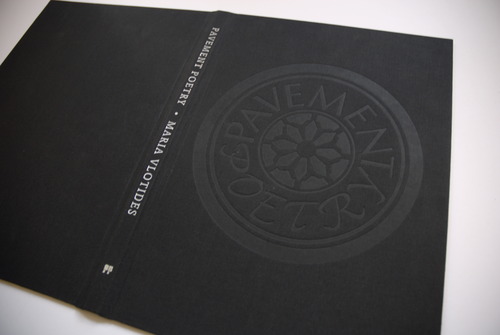
PAVEMENT POETRY (Maria Voltides 2010)
If the first two books were vintage charity-shop treasures, the last book featured is brand spanking new and decidedly modern. The author, Maria Voltides, is an artist behind a project in Notting Hill where commissioned authors had a 20 word phrase describing an aspect of the area  transcribed to coal-hole inspired plaques which were then set in the pavement. A project not unlike the historically-inspired one around Brick Lane I'd guess. There's a nice article online which explains the concept in greater detail and an article in The Guardian as well.

PAVEMENT POETRY - Maria Voltides 2011
This is, in essence, the book to accompany the project but what makes it interesting from my point of view is that it is a book of two halves. The first half concentrates on the project as it developed over time, but the second half looks at London coalholes themselves and provides a fine photographic record of some of the remaining examples in the area. A bit of a niche art market production maybe (it's a limited edition of 500) but anything that celebrates coalholes is fine with me!

Sunday, 13 February 2011

The Southfields Tout

As the alighting point for the Wimbledon Tennis tournament Southfields station would be an ideal platform for any advertiser hoping to catch the eye so perhaps it's no suprise to see the remnants of a large ghost sign on the side of one of the older buildings. Quite what it's advertising though I'm not so sure and even looking at it closely doesn't help a great deal.
The obvious bit of text that is still legible is the word 'TOUT' in the middle of the wall. And that's a bit of a conundrum because as far as I'm aware a Tout is a seller of dodgy tickets or someone who pushes a certain line on a subject. Could it be the name of a defunct newspaper? Some special betting combination?  I'm not really sure....    
Looking a bit closer you can also see the word 'WORLD' (News of the World?) above Tout and you can just make out 'LAWN TENN' below it. This was obviously 'Lawn Tennis' which shows that some of the original sign has been lost. With that in mind I was looking just above the N's in Tennis and you can just make out the bottom of another letter, possibly an 'e' or a 'c'. As the roof there seems to be new I suspect there might well possibly have been another letter there as well.
All in all it's a very intriguing ghost sign but one that leaves a few questions behind it. I wonder if there are any archive photographs showing it in its prime?

Stop Press!  Thanks to a comment left by Rockin' Brian it's now clear that the sign was originally for a British tennis court construction company (despite the French name) called En Tout Cas and that a significant section of the sign has been lost over time. My guess would be that the sign had been partially covered with modern hoardings which protected the sections below. These hoardings have since been removed to reveal what's left. En Tout Cas are still in existence and have a potted history of the company on their website.  Many thanks for that Brian!

Wednesday, 9 February 2011

The Putney Pest Houses

If you've ever walked around Putney Common over the last few years you might have noticed the old Putney Hospital just off the Lower Richmond Road. It's slightly unusual in that it's a building that seems to have been condemned and boarded up, but never actually demolished, so it sits there like an American Mid-Western Ghost building just waiting for an arty blogger to take a series of atmospheric shots for internet publication.

It closed in 1999 a victim of the drive toward larger hospitals and away from smaller, local provision. I remember it personally from having stitches put in my head after a playground accident at primary school and they did a pretty good job as I recall so no complaints from me on that score...

I was over Putney the other day and took the opportunity for a bit of a look around the hospital site when I noticed a row of small cottages, very reminiscent of alms houses, just to one side. There was a large white plaque in the middle which was crying out for a closer look.
A Very Tempting Plaque Indeed.
 It's quite a large effort and on closer look is obviously one of those that decides to list everyone involved with the project. This in itself could be quite interesting of course - was Mr Charles Lacey connected with the nearby Lacey Road for example? - but the most intriguing part of the inscription was the top section

"Putney Labourer Cottages. Erected on land belonging to the Pest House Charity AD 1862"
Pest House Charity? A Charitable House for Pests? Definitely worth a bit of research I felt so when I had the chance I looked into the whole topic of Pest Houses.

'Pest', it seems, is short for Pestilence. Pest Houses were commonly-owned building on the fringes of villages where those struck down with the plague or other infectious ailments could be re-housed until the illness took its course and they either recovered or died. An early form of quarantine really and in Putney's case I suppose the edges of the common would have been the ideal spot. Close enough to keep an eye on but far enough away from the main body of the population to avoid contagion.

Putney's Pest Houses seem to date from the 17th century and there are two extracts from The Environs of London by Daniel Lysons published in 1792 that give an idea as to their use when the plague hit town
In the year 1625 twenty-five persons died of the plague here; in 1665 seventy-four; and in the ensuing year ten persons only. It may be observed, that its ravages were much less fatal here than at Mortlake, though the parish is more populous, and the communication with London must have been more frequent, Putney being a considerable thoroughfare
Could it be that the effective use of the Putney Pest Houses helped contain the plague? When someone was affected though, there was a standard procedure to put in place
Among the same papers is an order of council, containing the following regulations:—That the houses of such persons as could not conveniently be sent to the pest-houses, should be shut up and guarded by a warden, a red cross being affixed to the door; that if any person who was required to keep within an infected house should go abroad, he should be immediately apprehended and sent to the pest-house, not being suffered to return to his own dwelling; that when a visited house was opened, a white cross should be affixed to the door, with a bill in writing, signifying how long it was since the last person died there; which writing should remain forty days, during which time the goods and rooms should be aired and sumed with brimstone, and other wholesome fumes; that the churchwardens of each parish should take care to cover their churchyards with unslaked lime twelve inches thick, and the like quantity of gravel, to prevent noxious vapours from exhaling; and that the wardens attending visited houses should warn passengers not to approach too near
Wandsworth Bourough Council have an informative document on the Lower Common area of Putney, including some information on the original Pest Houses
Until the mid 19th century, little building took place around the Common, but during times of recurrent plague, temporary wooden structures,known as `pesthouses', were erected to quarantine the sick and removed when the danger had passed. A couple of barns are shown on the east side of the Common in Lane's map of 1636, in the present location of the Cricketers and Spencer Arms pubs, presumably to house agricultural produce. A brick pesthouse built in 1665 lasted until 1860, when it was demolished to make way for the building of cottages in Commondale... These were amongst the earliest permanent development in the area, along with other small workers' cottages on the east side of Putney Common (currently nos.2-4), and Lower Richmond Road (replaced in 1882 by nos.217-235), All Saints School (1852, rebuilt in 1893-6) and later All Saints Church (1870)
A comprehensive list of Administrators and Trustees
The fact that the old brick Pest House building was knocked down in the early 1860s is confirmed by the plaque itself, but the trigger for its removal isn't. What finally caused the removal of the Pest Houses was found in an interesting snippet in The Lancet of 1862 of all places, under the heading "A Relic Of The Plague" where it picks up on a court case that had interesting medical origins.


The Lancet 1862

 As the resolution of the typeface none too clear, to summarise the Lancet article, it seems that Mr John Gray, 'a working man', managed to squat in one of the Pest Houses. At least he 'unlawfully intruded himself' into one of them (which I assume is the same thing) and refused to budge even after being given a month to quit. Although the churchwardens had allowed poor people to live in the houses when there was a lack of plague or pestilence in Putney, Mr Gray really seems to have upset them with his slovenly and unhygienic living arrangements to the point that they feared he might actually start a new outbreak of the fever!
 
One of the churchwardens who provided a statement to the court was Mr Watlin, and it's probably no surprise to find that he is also on the list of administrators on the later Pest House plaque. Having come to some 'arrangement' with Mr Gray - which must of included his removal from the property - they immediately knocked the old structures down and replaced them with the more attractive and (from the Victorian point of view) more 'useful' row of cottages for labourers that currently occupies the site. I assume that there must have been some financial reward gleaned from the developer somewhere along the line as the local Pest Houses Charity was set up and, in fact, still awards grants of money to local organizations, although the amounts it deals in are pretty small these days and there's not too much pestilence around the common.

One last thought occurred to me. Could there be any historical association between the site of the old Pest Houses and the eventual founding of Putney Hospital on practically the same site? I'd of thought that building anything on the Common would be difficult, but it might just have been made easier if there was proof that it was a continuation of use on land put aside for that purpose in the first place.

Thursday, 27 January 2011

Signs of Brick Lane

A Sunday stroll down Brick Lane is always a pleasant way of spending an autumn morning and even more pleasant when you find a few photos on your camera a few months later. Which is very handy as I haven't had much opportunity recently for Faded London jaunts recently.

The three street signs
First up is this interesting group of street signs on the corner of .... as you can see...Sclater Street. Evolution in progress as we start of with the very ornate 19th century effort (or earlier?), the more functional and visible modern street sign and what I presume is a local translation of the street name for the benefit of the local population. Although I suppose it must be a transliteration rather than a translation as I'm not sure how you'd translate 'Sclater'.
I don't know what Page & Co were specialists in but their little factory unit is still there, tucked away in a sidestreet just off the main drag
This looks like it might have been owned by the Lewis family but although there are new owners there seems to have been a continuity in the use of the store. Still a newsagent and still selling cigarettes.
Talking of the street signs in other languages, here's a reminder of a previous influx of immigrants who also settled in the Brick Lane area. CH N. Katz was a twine and string merchant, a fairly specialised area of work I'd of thought, and it seems as thought the business only closed down a few years ago.
Middlesex ,Street EC1
And finally, just at the top of Petticoat Lane the removal of an advertising hoarding - last seen advertising the Monty Python musical Spamalot - reveals the remains of a car park sign lurking beneath. Not particularly old or exciting, but it couldn't pass it by without the courtesy of a mention, especially as it's probably been recovered by now.

Having stumbled accross these pictures I think it's about time I checked to see what other gems I have tucked away in obscure folders!

Saturday, 15 January 2011

The Number One Lampost in Water Lane!

Here's an interesting little item I spotted in a Kingston back street the other day. It's just behind the Bentalls complex near the river and is on Water Lane, aptly enough. As you can see it's the trunk of an old lampost and it seems to be a bit of a born survivor as over the last decade or so the whole of this area had been cleared and a range of buildings, flats and car parks had sprung up. It would appear unrecognisable to someone who lived here fifty years ago but for some reason this non-functioning lampost seems to have been left alone and would probably be the only reminder of that particular period

The box at the top is made by a company called Mazdalux which was apparently one of the brand names used by a company called British Thomson-Houston and I've spotted an interesting advert from 1945 which mentions the brand and its associations with street lighting although they were also very much involved with aircraft and airfield lighting as well.  I'm no expert in on lamposts but if pushed I'd guess that this one might date to between 1940 to 1950. It doesn't look ornately Victorian and seems a bit of a stylistic half-way house between ornamentation and functionality. As you can see in the background there are new lights down the road so the question remains as to why this one wasn't removed?


About half-way up the post are a couple of paper stickers which also intrigued me. The big number 1 is pretty obvious but it's partner underneath seems to be instructions for reporting any lamps whose lights had failed and provided the council phone number and the request to provide the street name and the lamp number.
I had harboured some thoughts that this might prove to be Kingston's number One lampost, which would be quite an honour for such a venerable old post,  but I suspect now that it might just prove to be Water Lane's number One. Not quite so prestigious, especially as there are so few competitors for the honour...   

It's a pity the phone number is missing as I'd feel it my civic duty to report the fact it's no longer working.

Thursday, 16 December 2010

Elizabeth Street, Belgravia

Elizabeth Street probably isn't a London thoroughfare that rings bells with most people. It certainly didn't ring any bells with me until I found myself taking my wife there for a birthday visit to a specialist perfumer with the promise  of a birthday scent not bought from the local Boots. Les Senteurs was the intended destination and, for someone with with a slight  background in the wine trade, I have to admit it was an interesting and less intimidating experience than it might have been. For one thing smelling perfumes is not all that different from smelling wines (and there's certainly a lot less spitting) and for another the assistant was very obliging and was more than happy to provide samples to take away and try. Which is a roundabout way of saying that not only did we get to try a load of perfumes, but I was also spared the pain of actually paying for any (for the time being at least). Result!

Not expecting anything like such an agreeable experience, I'd also taken the camera along, just in case anything interesting took my eye.  Elizabeth Street is a few minutes walk from Sloane Square and the Royal Court Theatre, just off the northern branch of the Kings Road , so one of the last things I'd of expected to stumble across would be a ghost sign. Yet there it was. Almost as soon as we entered the street we could see a small mews off to the right with a still visible "Horse Infirmary and Shoeing Forge"
The view from inside the Mews - not the best of angles
It looked as though there had originally been more advertising on the top section as well as at ground level, but these had long since ceased to be visible. Still, it's a nice reminder of the original status of these small urban spaces.
     From Elizabeth Street the sign is much clearer
So, looking up was a treat, but looking down was quite interesting too. There were a couple of interesting coal-holes still in place, including one from "A. Smellie - Westminster"
Notes & Queries - Oxford Journals 1906


It's a fairly ordinary design, but I did find mention of the construction of a new building for Mr Smellie so I assume he must have been a well established local producer, and in fact Rochester Row is not all that far from Elizabeth Street, so he probably was the local supplier.

 The other designer coalhole is made by  'Luxfer Prisms 13 Hill Street London EC'.

The interesting thing about this coal-hole is that the glass prisms that would have originally helped illuminate the gloomy coal cellar have long since been replaced by concrete infills. Glassian has some more information about the Luxfer company which was producing fairly late versions of coalholes.
Luxfer Prisms - minus the prisms...
 The last items to catch my eye were a couple of plaques flanking a narrow jewellers window.
"Ornaments in Hair Plait and Mounted on the Premises - Gold & Silver Bought"
"English & Foreign Clocks & Watches Cleaned & Repaired By Experienced Workmen
 Although now under new ownership the original plaques have been left in place and make a very attractive setting either side of the main window. The company seems to be called J. Desforges but I haven't been able to find out much about them to date. The fact that working items in hair seems to be a big part of their business would suggest a late Victorian date for the company. It's an interesting use of a garter or belt motif as well although it may just be a decorative notif rather than signifying something like a Royal Warrant. Very intriguing ornaments though and credit where it's due to the new owners who must have been tempted to take them down in order to widen their window space.

I may have to go back to buy some perfume at some point but I have to say that Elizabeth Street provided me with more than a couple of unexpected pleasures!

Wednesday, 10 November 2010

A Balham mosaic

I suppose this is an entry to file more under 'cute' than 'intriguing' as I'm not sure there's much more to it than its aesthetic quality. It's a long thin strip of mosaic with little more than a recurring flower motif that I came across in Balham the other week. It was obviously the threshold of a decent sized premises in its heyday but now it's spread between two different shops and in places it's starting to look a little worn.
Still, despite its simplicity I was quite attracted to it and thought it was worth a brief mention. Although the flowers are simple they're quite effective and it would be interesting to know what the original store was...

Monday, 18 October 2010

The Ghost Signs of Bath - Part 2 (Faded London on Tour 2010)

Part two of the ghost signs of Bath takes us around the Pultney Bridge area, starting off with a couple of choice ghost signs in Argyle Street. This first is a building that was once a veritable billboard, with practically all of its surfaces covered in text. Although almost illegible the odd word still peeps through. It's noticeably grubbier than its neighbours as well which shows that the owners are probably conscious of their heritage potential and not keen to lose it!
Very tantalizing - your very own deciphering puzzle!
I thought this building was worthy of a couple of close ups to help with the reading process so good luck with these ones...
  
Also on Argyle Street was this brilliant effort at integrating ghost signs, ghost windows, modern art and a sense of humour! As you can see what was a lending library now has an 'interior view' painted on its ghost window. This is either a nice example of whimsy or ironic post-modernism, you pays your money and takes yer pick...
This was actually taken from the embankment of the river over to the other side. An example of extreme range ghost sign hunting and a slightly out of focus picture! A. Wills & Sons Ltd are now lurking just behind what looks like a bar or riverside pub.
A. Wills & Sons Ltd
Here are a couple more examples of faded yet preserved signage from the Pultney Bridge area. After a while ghost sign hunting in Bath becomes a bit like shooting fish in a barrel. You can't turn a corner without bumping into one!
SIGN 1...
...and SIGN 2
Back in the centre of Bath, right next to the Roman baths themselves, there's an unashamed ghost sign proudly declaring its pre-cholesterol love of cream!  (established in 1850 apparently. No idea when the cream business bit the dust though)
Just off of Beau Street there's a very nice modern spa complex called Thermae and if you look opposite there's an old pump room, again with the browned and stained painted signage carefully preserved
 
And finally for this post, just in case you're starting to find all these West Country ghost sign just too much of a good thing, here's some interesting vents, oxidised glass and wooden infills of a fine old London cellar light from Hayward and Sons!